

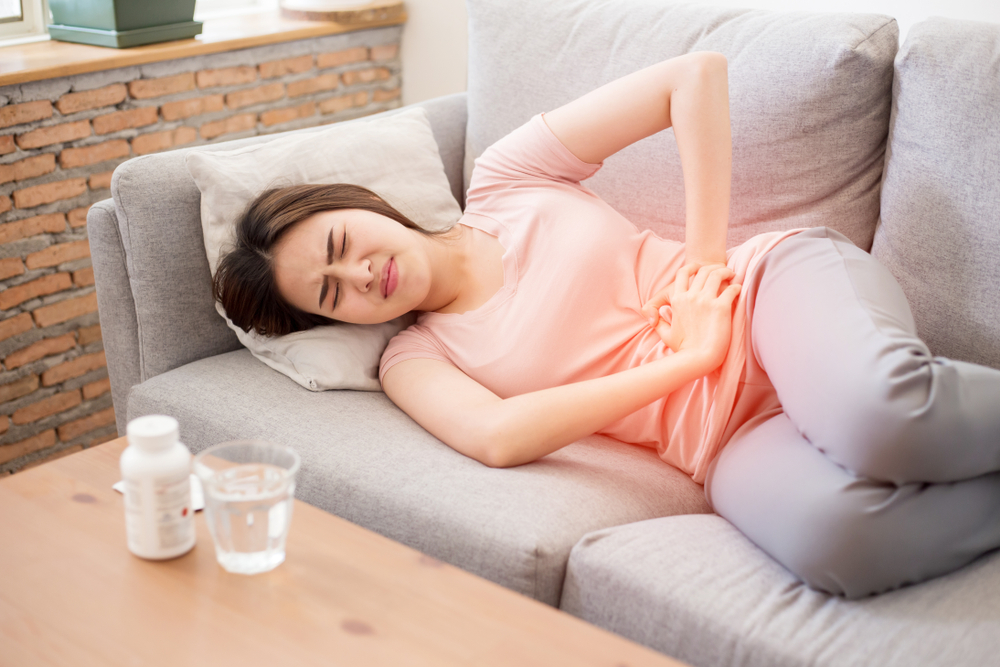
Painful Menstruation
The medical term for painful menstruation or menstrual cramps is dysmenorrhoea. It is a cramping pain usually felt around the lower abdomen and sometimes lower back during a woman’s menstruation.
Thank you for reading this post, don't forget to subscribe!For some women, it is mild. But for others, it is severe enough to interfere with their daily activities for a few days monthly.
The pain reduces with age and in some women, it ceases after childbirth.
Causes.
During menstruation, the womb contracts to expel blood and tissues. A substance known as prostaglandin helps to trigger this contraction, if there are higher levels of prostaglandin, the woman feels more pain.
Some other conditions that can cause menstrual cramps include;
– Use of Intrauterine Contraceptive Device (IUCD): This is a small contraceptive device inserted into the womb. The pain usually occurs within the first 3-6 months and subsides afterward.
– Endometriosis: This is when tissues that are usually supposed to be in the womb only, begin to grow in other places such as the fallopian tubes and ovaries.
– Uterine Fibroids: The growth of non-cancerous tissues in the womb.
– Pelvic inflammatory disease.
– Cervical stenosis: Narrowing of the cervix, making it difficult for blood to flow freely, thereby causing pain.
– Adenomyosis: This is when the outer lining of your womb begins to grow into the muscles in the womb.
Risk factors.
– Younger than 30 years.
– Started menstruation early, at 11 years or younger.
– Heavy menstrual flow.
– Irregular menstruation.
– Family history of menstrual cramps.
– Smoking.
Symptoms
– Cramping pain around the lower abdomen that may be severe.
– Pain that starts 1-3 days before your period and subsides 2-3 days after the period.
– Pain that can spread to your lower back and thighs.
– Feeling of pressure in your lower abdomen.
Some women also experience;
– Nausea.
– Vomiting.
– Diarrhoea.
– Headache.
– Dizzyness.
See a doctor if;
– Menstrual cramps disrupt your life every month.
– If your symptoms keep worsening.
– You started having severe menstrual cramps at 25.
Complications.
Menstrual cramps do not have complications except when caused by other health conditions such as Endometriosis and Pelvic Inflammatory Disease; these can cause fertility issues or ectopic pregnancy.
At the hospital, a pelvic examination, ultrasound scans, and other tests are done to diagnose menstrual cramps and their cause.
Treatment.
Treatment is usually with pain relief or prescribed hormonal contraceptives.
Surgery may be done in cases where the cause is from other health conditions such as Endometriosis or Fibroids.
Some home remedies for menstrual cramps include;
– Warm/hot compress: Placing a hot water bottle below the abdomen or soaking in a hot bath to relieve pain.
– Physical activity.
– Massaging your lower abdomen and back.
Some preventive measures can help.
– Exercise.
– Reduce stress, especially psychological stress.
– Avoid smoking and alcohol.
– Reduce caffeine intake.


