

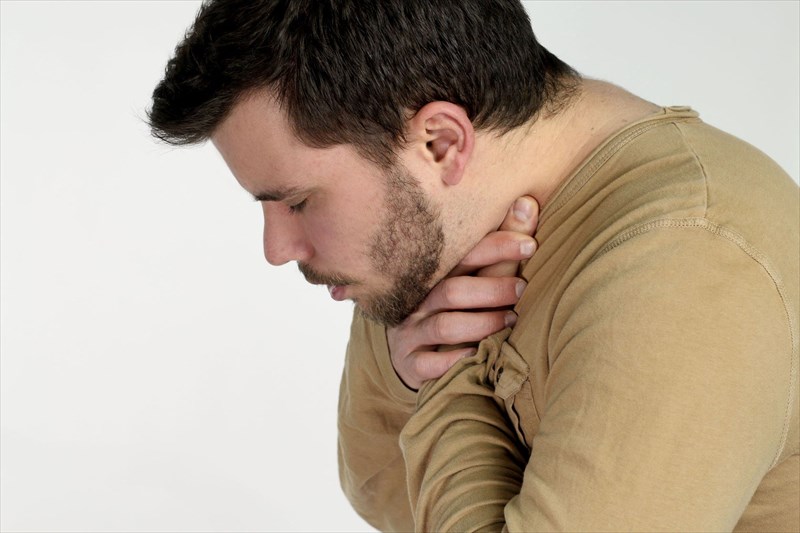
Choking
Choking is a blockage of the upper airway by food or other objects, which prevents a person from breathing effectively. Choking can cause a mild coughing episode, but complete blockage of the airway may lead to death.
Thank you for reading this post, don't forget to subscribe!Choking is a medical emergency that requires immediate and appropriate action by anyone available. Most times, medical help may not arrive before a choking person is severely affected or dies, therefore it is important that anyone available should be able to provide immediate help to save a choking person’s life.
Causes
Choking is caused when a piece of food or other object gets stuck in the upper airway.
– In adults, choking most often occurs when food is not chewed properly, talking or laughing while eating.
– Swallowing may be slow or impaired and cause choking if a person is drunk or under drug intoxication or has certain illnesses such as Parkinson’s disease (a disorder that affects the movement of the body and causes trembling).
– In the elderly, risk factors for choking include advancing age, poorly fitted dental implants, and alcohol consumption.
– In children, choking is often caused by chewing food incompletely, attempting to eat large pieces of food or too much food at one time, or eating hard foods. Children also put small objects in their mouths, which may become lodged in their throats some of these include; nuts, pins, buttons, coins, etc.
Signs.
– Coughing.
– Hand signals and panic (sometimes pointing to the throat).
– Confusion.
– Sudden inability to talk
– Clutching the throat: The natural response to choking is to grab the throat with one or both hands. This is the universal choking sign and a way of telling people around you that you are choking.
– Noisy breathing.
– Passing out.
– Turning blue: Especially around the face and lips.
– Difficult breathing.
– Weak cry, weak cough, or both.
In the hospital, after resuscitation, some tests such as scans and x-rays will be done to further ascertain that the airway is clear and there are no complications or disease conditions.
First aid tips to help a choking person.
– Call for help.
– If the person is coughing vigorously and not turning blue, ask are you choking?’. If they’re able to answer it indicates a partial airway blockage. Stay with the person and encourage them to cough until the blockage is cleared.
– Do not give the person anything to drink as water can take up space in the airway.
– If the person is unable to respond, follow the following steps.
Step 1: – Make the person stand.
– Bend them slightly forward while you stand slightly beside and behind them with one hand supporting their chest.
– Give five back blows with the heel of your other hand between their shoulder blades and check if the blockage has been removed after each blow.
Step 2: If the back blows do not dislodge the object;
– Stand directly behind the person.
– Place one foot in front and one behind for balance.
– Wrap your arms around their waist.
– Make a fist on one arm a little above the person’s navel.
– Grab the fist with the other arm.
– Press into the stomach with an upward thrust as if trying to lift the person up. Do this five times.
– Alternate between steps one and two till the object blocking the airway comes out.
– If you’re alone, use your hands or the edge of a chair to apply pressure on your stomach.
For Children above one year of age: Kneel to perform steps one and two.
For infants below one year of age:
– Sit and hold the infant facedown on your forearm. Rest your forearm on your thigh. Hold the infant’s chin and jaw to support the head. Place the head lower than the body.
– Give gentle but firm back blows five times in the middle of the back. Use the heel of your hand. Point your fingers up so that you don’t hit the back of the infant’s head.
– Gravity and the back blows should release the blockage.
– Turn the infant face up on your forearm if breathing doesn’t start.
– Rest your arm on your thigh. Place the infant’s head lower than the body.
– Give five gentle but firm chest compressions with your fingers. Place two fingers just below the nipple line. Press down a little. Let the chest rise between each compression.
– Repeat the back thumps and chest compressions if breathing doesn’t start.
– Call for emergency medical help.
For Pregnant women: Do step one as recommended above.
Step 2: Place your hands just below the chest.
– Press hard into the chest.
If they become unconscious while waiting for help:
– Lay them on a flat surface with their hands by their side.
– If you can see the object blocking the airway, try to sweep it out, if you can’t, stop. Do not try to sweep out if you can’t see the object to avoid pushing it further.
– Tilt the head slightly to make it upright.
– Kneel by the person and put the heel of your hand on the middle of their chest. Put your other hand on top of the first and interlock your fingers.
– Keep your hands straight and lean over the person.
– Firmly apply downward pressure and release. Do this for up to 100-120 times per minute till you get to the hospital or emergency medical help arrives.
Treatment.
The treatment for choking depends on whether the object was successfully dislodged and the length of loss of oxygen.
– A breathing tube is usually inserted into the airway to provide oxygen to the lungs in cases where the object was not dislodged or severe oxygen deficiency.
– Some individuals may require a simple procedure to remove the object or surgery.
Prevention.
For children:
– Do not give young children hard foods or small objects that may get stuck in their airways, e.g. nuts, seeds, gum, or hard bone.
– Chop food into smaller and easily chewable pieces before giving it to children.
– Watch children with toys that have small pieces or parts that can easily be dislodged and swallowed.
– Clean up immediately after parties, choking on a rubber balloon is one of the frequent causes of choking aside food.
– Store small objects such as buttons out of children’s reach.
For adults:
– Avoid placing objects such as nails or pins in your mouth.
– Take small bites and chew food thoroughly.
– Alcohol may impair your ability to chew and swallow and increase your risk of choking. It is therefore advised that food should not be fed to an intoxicated person.
Complete airway obstruction as a result of choking can cause oxygen deficiency in the brain and other body tissues and can result in brain damage or death within 4-6 minutes. It is therefore very important to prevent choking and be ready to help a choking person.


