

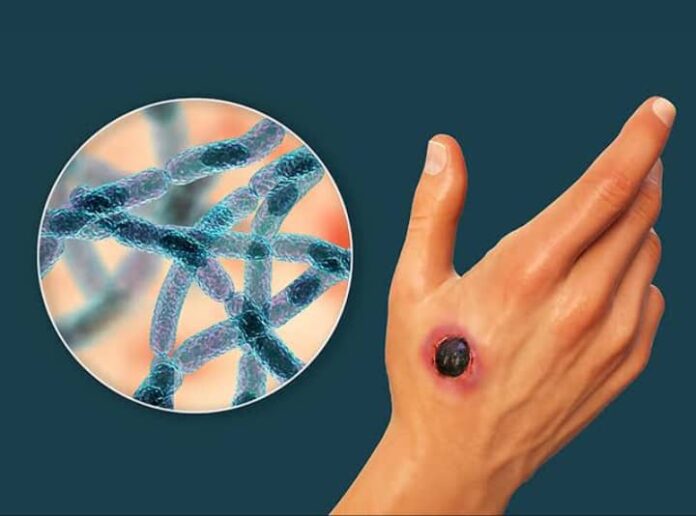
ANTHRAX
Anthrax is a bacterial disease that is spread from animals to humans. If not treated early, it can be a deadly disease. It is caused by the bacterium Bacillus anthracis which infects herbivores such as cows, goat, sheep, horses etc but does not affect animals like fish and chicken. It affects both males and females equally and is a disease of public health concern.
Thank you for reading this post, don't forget to subscribe!People at risk
- People who rear animals and come in contact with sick animals.
- People who work with animal hair and skin.
- People who eat poorly cooked contaminated meat.
- Veterinary, healthcare workers and animal handlers.
- Law enforcement officers
Transmission and clinical manifestation
People get anthrax through direct contact(cutaneous) with the bacteria from animal sources or they inhale(inhalational) it from animal hair and wool or eat it(intestinal)in contaminated meat. You cannot get Anthrax from an infected individual meaning no man to man transmission. Symptoms of Anthrax can start manifesting within 1-7 days from when one comes into contact with the bacteria and some of the things to look out for include:
- Skin rash that starts like a small ‘pimple’ which will burst and leave a wound with a black area in the middle. It is usually itchy but not painful.
- Fever
- Abdominal pain
- Nausea
- Vomiting
- Diarrhoea
- Dry cough
- Shortness of breath
- Fast breathing
- Chest pain
- Vomiting of blood
Investigations
Some tests that could help the doctor diagnose Anthrax include:
- Blood culture
- Chest X-ray
- CT(computed tomography) scan
- Lumbar puncture
Treatment
Anthrax is treatable but chances of survival increases with early presentation and is best with the skin(cutaneous) affectation. Antibiotics are the main treatment and commonly used ones include doxycycline, ciprofloxacin and amoxicillin.
Prevention
As Anthrax can result in an outbreak, prevention is very important in staying healthy. Prevention includes:
- Vaccination: This is the best preventive method as both humans and animals can be vaccinated to limit spread but is available to only individuals at high risk.
- Avoid eating poorly cooked meat or hides(‘kpomo’).
- Do not buy meat from a sick animal.
- Report sudden death of sick animals to the relevant authorities particularly those who died bleeding from their orifices.
- Use personal protective equipment such as gloves, facemasks, boots, etc. when handling sick animals.


